Hello! We'll talk real money for early startups — who writes cheques here, and what they ask.
| Quick answer: early money follows evidence; a pilot, pre-orders or a few invoices change the conversation from ideas to numbers investors trust. |
Startup funding in South Africa is a stage game 🚀, not a lottery. Investors fund momentum at a specific stage, and the businesses that raise are usually the ones who matched the ask to the stage — no more, no less.

The Five Stages
| Stage | Where the money comes from | What you must show |
|---|---|---|
| Idea | Yourself, savings, friends | A prototype or pilot |
| Early traction | Accelerators, competitions, small grants | Paying customers and a working product |
| Growth | Angel investors | Repeatable sales and a plan for the next twelve months |
| Scale | Venture capital | Fast growth in a large market, strong team |
| Expansion | Later-stage funds, partnerships | Proven unit economics and governance |
What Investors Actually Read 🧭
Three things: the market (how many people pay for this, and why now), the team (why you), and the numbers behind customer acquisition. Everything else — the design of the deck, the logo, the mission statement — is packaging. A deck that answers those three questions badly in a beautiful font is still a bad deck.

Get Ready Before You Pitch 🤝
- A one-page summary a stranger can repeat
- Twelve months of actual numbers, not projections
- Customer proof: retention, reviews, repeat purchases
- A clear use for the money, itemised by month
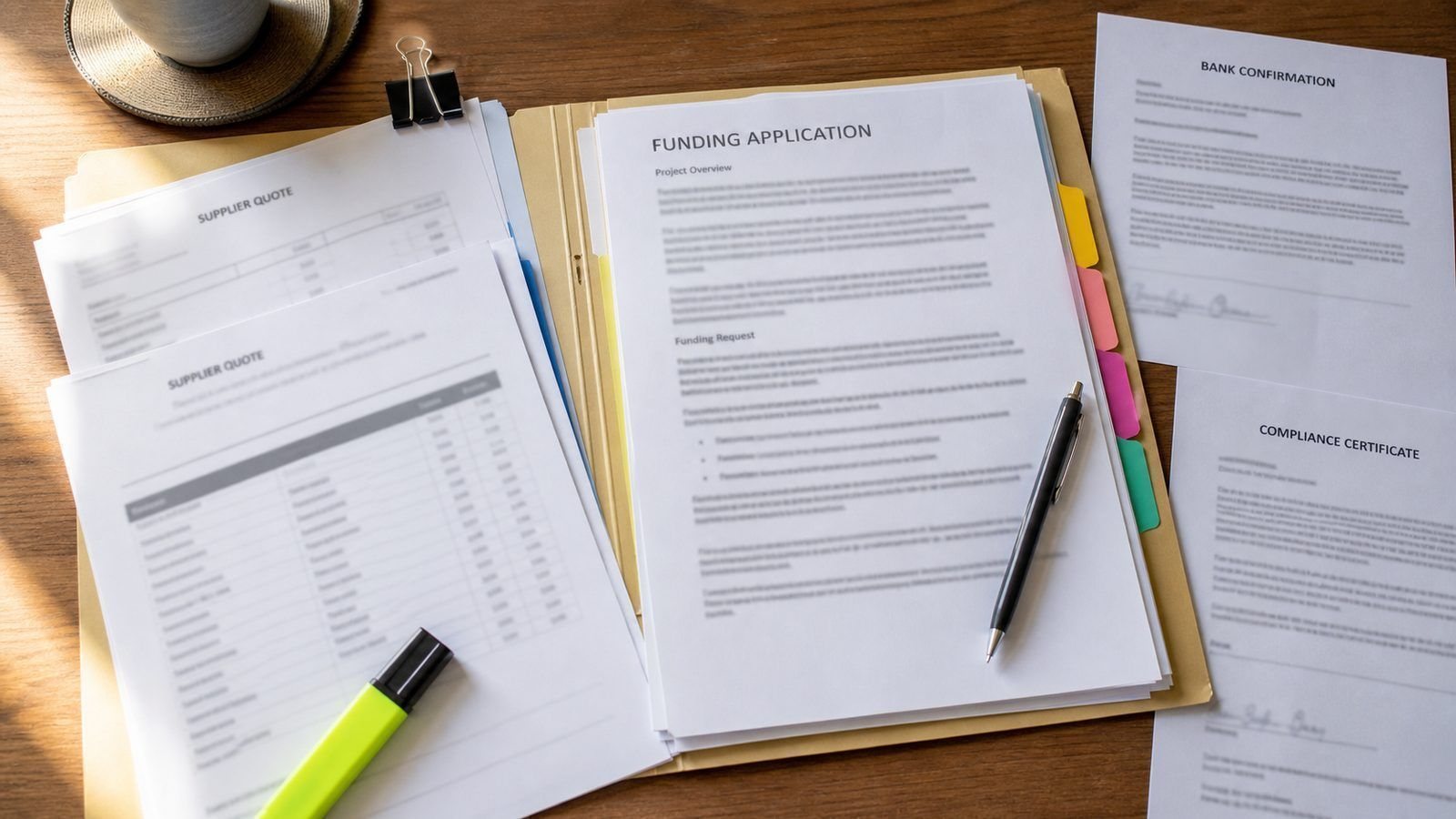
- Cap table and company documents in order

The Cost of Wrong Money 💰
Money taken at the wrong stage costs more than it brings: equity given away in month two at a valuation you cannot defend, or a loan repayment schedule on revenue that has not stabilised. Match the instrument to your cash cycle before you match the number to your wish list.

The Metrics Investors Ask For
Prepare answers for six numbers: monthly revenue and its trend, gross margin, cost of acquiring a customer, how long a customer stays and what they spend, monthly cash burn, and how many months of runway the new money buys. You do not need a finance department — you need these six on one page, current, and defensible line by line.
If a number is unflattering, bring it anyway and explain the plan. Investors discount founders who present only good news, because the first hard month after closing will reveal the gap between the story and the operating reality.
Structuring the Deal Sensibly
Three questions decide whether a deal is fair: what percentage you give away, what rights come with it, and what happens at the next funding round. Protect your ability to make decisions for a reasonable period, and avoid terms that allow an investor to block ordinary operations.
Get proper advice before signing — a few hours with a commercial attorney costs far less than a badly structured cap table discovered three years later, and it is the one part of raising money where doing it yourself is genuinely expensive.
Warm Introductions Beat Cold Emails
The best route to a South African investor is almost never a cold email. It is a referral from someone who already knows both of you: an accountant, a former colleague, a mentor, another founder who has raised. Build that network long before you need money, by being useful — sharing numbers, making introductions, showing up when there is nothing to ask for.
When you do ask, ask for advice first and money second. Most investors will talk about the business before they talk about a cheque, and a good conversation with no investment is still a connection whose next conversation is easier. Cold pitches occasionally work; warm ones work far more often, and they cost nothing extra to prepare for.
How to Spend the First Month After Raising
Money in the bank changes behaviour. Keep the discipline: publish the plan to your team so hiring and spending follow the milestones you promised, and report progress to your investors monthly even when the news is mixed. Keep a buffer of at least three months of costs outside the funded plan, because surprises arrive funded or unfunded.
The most common post-raise mistake is hiring ahead of the revenue that justifies it. The second is quietly changing the plan without telling anyone who backed it. Both hurt at the next round, when people who wrote cheques last time are asked to write them again and remember how you behaved the first time.
Frequently Asked Questions
Do I need a registered company to raise?
Yes, investors will expect a registered entity, a bank account and clean share records.
How long does raising take?
Three to nine months is normal. Start conversations months before you need the money.
What if I cannot raise?
Revenue is the oldest funding round there is 📊. Many of the strongest South African businesses grew on customer money first.
Should I raise money before I have customers?
Rarely. Every investor will ask what paying customers taught you. A small pilot, a pre-order list or ten invoices changes the conversation from ideas to evidence — and evidence is what gets funded.
How much equity is normal at early stage?
It varies with risk and stage, which is why terms matter more than headlines. Give away what buys you twelve to eighteen months of progress, keep decision-making workable, and get proper advice before signing anything.
Do I need a pitch deck?
Yes, ten to twelve slides: problem, product, market, business model, traction, team, competition, financials, use of funds, and the ask. Everything else lives in an appendix you can send on request.
How much should I raise?
Enough for eighteen months of runway at your planned spend, no more and no less. Raising too little forces a rushed second round; raising too much dilutes you for money you cannot deploy.
Get your funding pack ready before the deadline does. See funding-ready packs and profilesAsk for a funding readiness check |