Hey! Let's get your plan's structure right first — order matters more than people think.
| Quick answer: structure wins before prose does — sections in the order assessors expect, numbers that reconcile, headings that answer fast. |
There is no law about business plan format in South Africa 🧭, but there is a convention — and every funder, bank and enterprise programme reads along the same railway lines. Following the convention does not make your plan boring; it makes it readable in the fifteen minutes an assessor actually has.
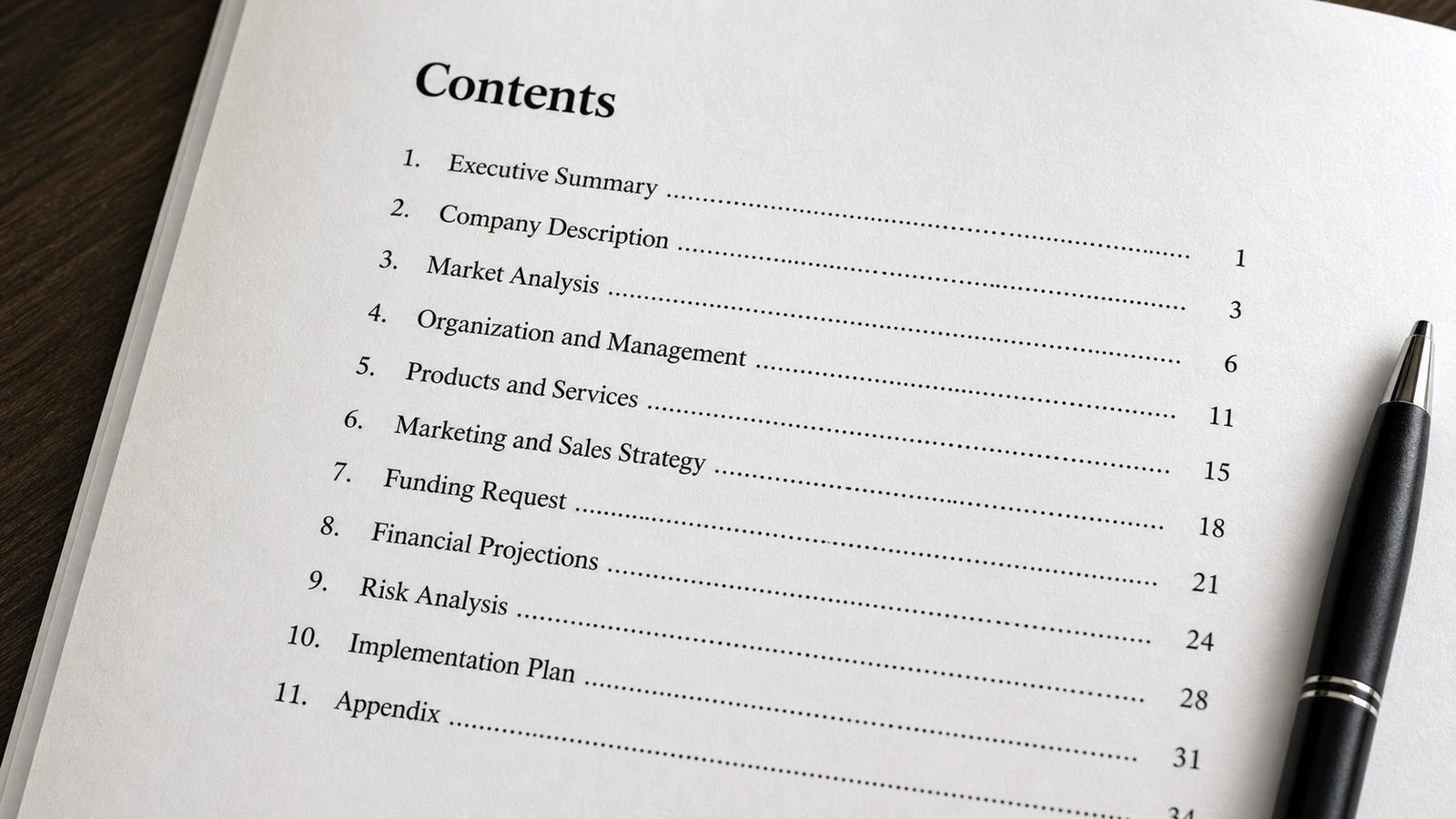
The Standard Order
| Section | Pages | Must contain |
|---|---|---|
| Cover and contents | 2 | Business name, owner, date, contact |
| Executive summary | 1 – 2 | The whole business in two minutes |
| Business description | 2 – 3 | What you sell, to whom, since when |
| Market analysis | 3 – 5 | Customers, competitors, pricing |
| Marketing plan | 2 – 3 | How buyers will find you, and at what cost |
| Operations | 2 – 4 | How the work gets done, suppliers, premises |
| Management and team | 1 – 2 | Who runs it and what they have done before |
| Financial plan | 4 – 8 | Monthly projections, assumptions, funding ask |
| Appendices | varies | Quotes, CVs, registrations, letters |
Executive Summary: The Two-Minute Test 📑
Write it last, keep it to one page where possible, and cover five things: what the business does, who pays for it, how much money you need, what the money buys, and what makes you credible. If a reader cannot repeat those five points after two minutes, the summary has failed regardless of how good the rest is.

Financials: Monthly, Not Yearly 🔢
Funders want twelve monthly columns: revenue, cost of sales, fixed costs, net. State your assumptions plainly — price per unit, units per month, growth rate — because every reviewer will test them. A modest, defensible number wins more trust than an ambitious one nobody can trace.
Presentation Rules That Are Not Optional 🖋️
- Consistent fonts and headings; numbered pages and a contents list
- Every table labelled with units (rand, units, months)
- No logos you do not own, no stock photos of other people’s businesses
- PDF export that opens on a phone

Page Count Discipline
Assessors read dozens of plans. The ones that get read properly are the ones with clear headings, short paragraphs, and tables that fit on a single page. If a section cannot be read in ninety seconds, it will be skimmed — and the number you most needed understood may be the one that gets skimmed past.
Two formatting rules do most of the work: one idea per paragraph, and every number shown with its unit and period. “R42,000” is meaningless; “R42,000 per month, from 40 customers a day at R35” can be interrogated, and a plan that can be interrogated reads as honest.
The Appendix Strategy
Keep the plan lean and push evidence into the appendix: supplier quotes, letters of intent, registration documents, CVs, photos of the premises, test results, licences. Then reference them from the text — “see Appendix C for three supplier quotes” — so a reader can verify without hunting.
An appendix is also where you demonstrate realism. A quote that shows you asked three suppliers and chose the middle one tells a funder more about your judgement than a page of adjectives ever will.
Formatting Errors That Cost You
The most common ones are mundane: a contents page with wrong page numbers, tables that split across pages, headings in three different fonts, inconsistent units, and a financial page that has clearly been pasted from a different document. None of them is fatal alone; together they give an assessor a reason to expect the business is run the same way.
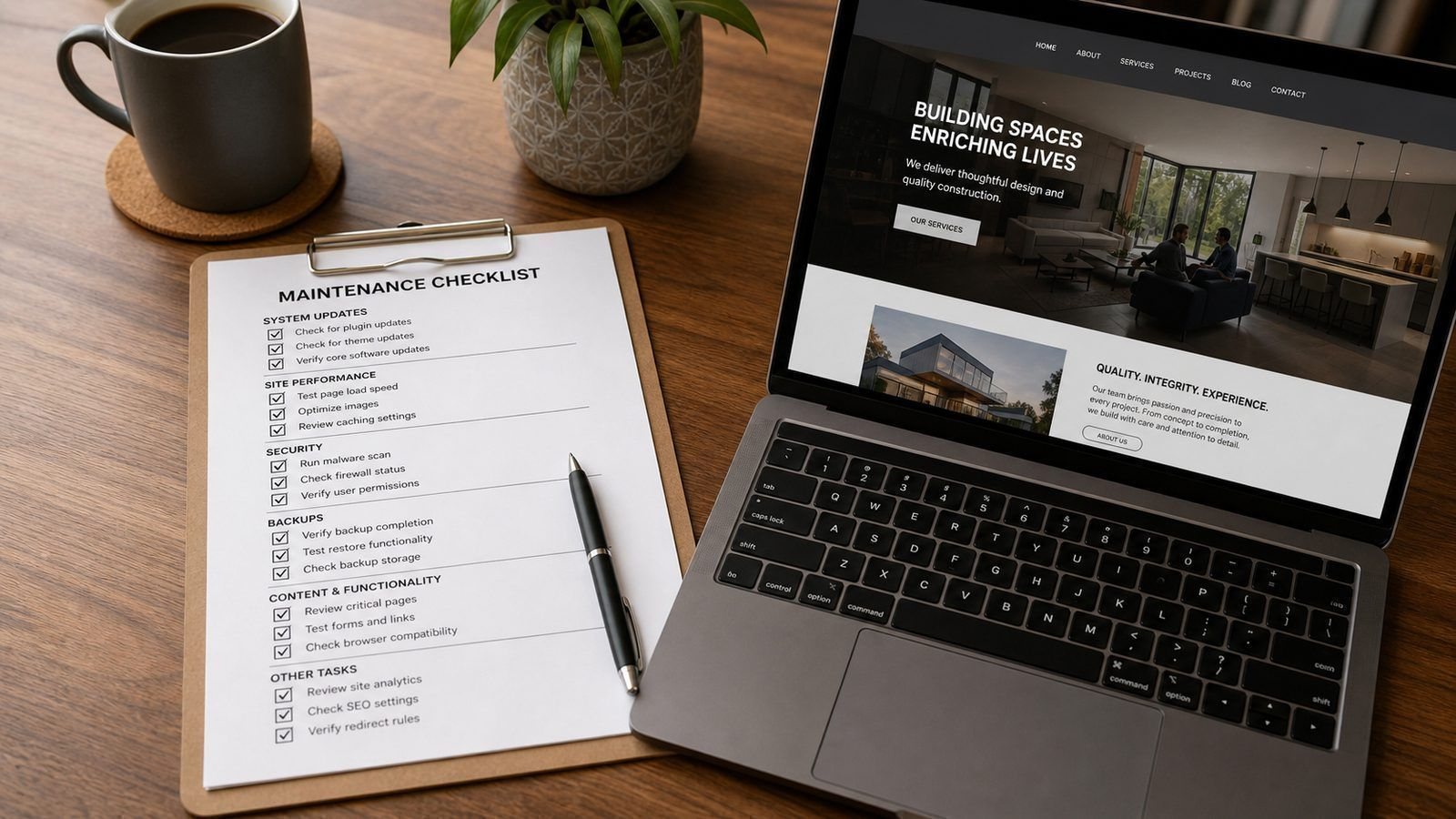
The cure takes an hour. Set one font and one heading size, refresh the contents list last, force page breaks before each major section, and read the financial pages aloud once. Plans that look orderly are read more carefully — and being read carefully is half of being funded.
Fixing the Format in One Pass
Take the draft and do four things. Force a page break before each major section so headings start cleanly. Refresh the contents list last, once page numbers stop moving. Set one font for body text and one heading size, and resist every temptation to add a third. Then read the financial pages aloud while following the numbers with a finger — it is the fastest way to catch a row that adds up to the wrong total.
That pass takes about an hour and changes how the document is read. However good the business is, the plan is the only part the funder meets first, and an orderly plan invites careful reading rather than polite skimming.
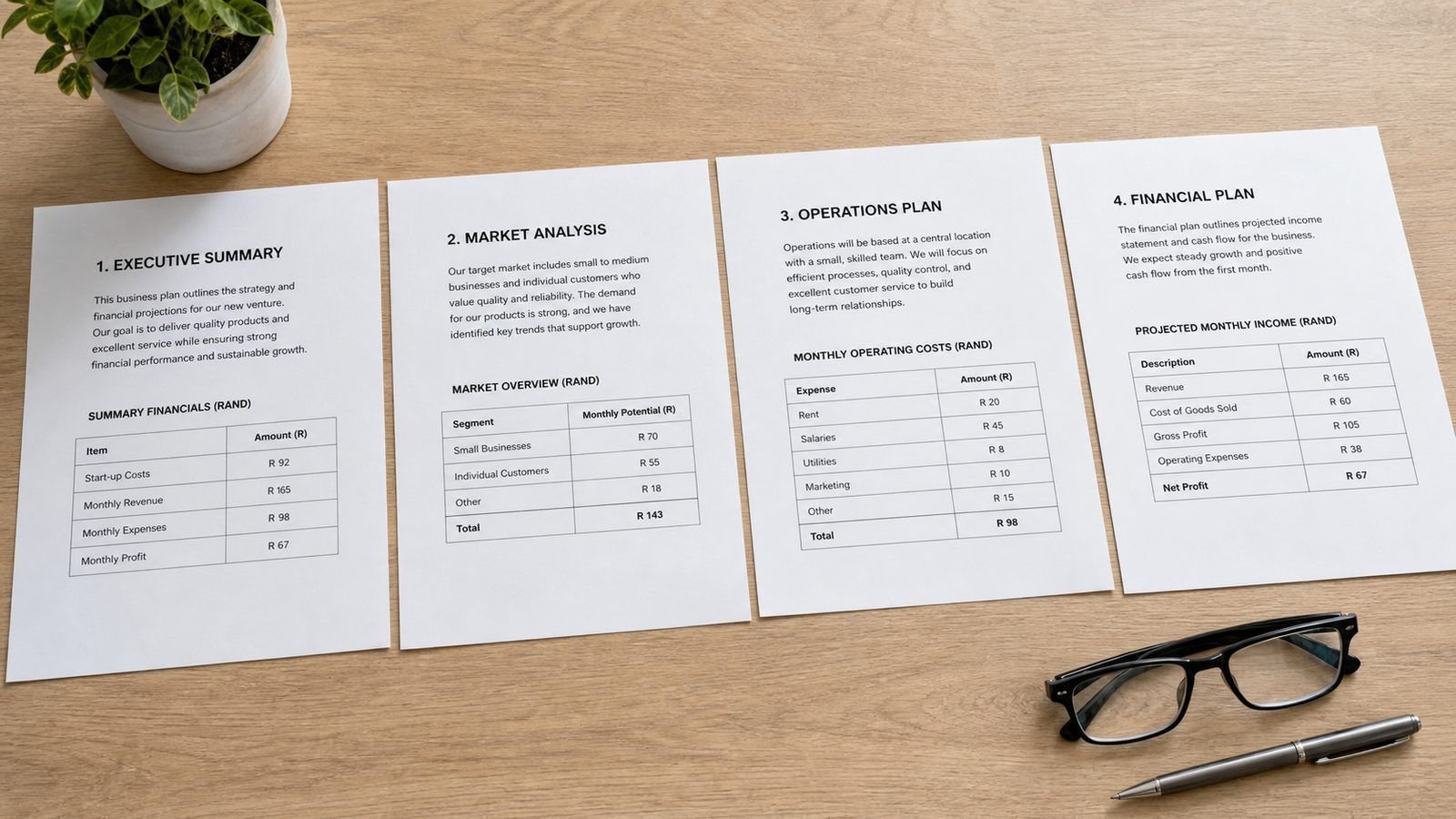
| Section order assessors expect 1 Summary. 2 Market. 3 The offer. 4 Operations. 5 Team. 6 Financials. 7 Annexures. Assessors navigate by number, so number the sections and keep the order — it is half the first impression. |
Frequently Asked Questions
Does the format differ for banks and for agencies?
The order is the same; the emphasis shifts. Banks lean harder on repayment ability, agencies on jobs and impact.
How long should the whole plan be?
Twenty-five to forty pages including financials and appendices.
Can a consultant write it for me?
Yes, and it often helps — but you must supply the numbers and be able to answer questions on every line ✅.
Can a plan be too long?
Yes. Past forty pages, length starts to argue against clarity. Cut repetition, move evidence to appendices, and keep the main document to the sections an assessor expects — in the order they expect them.
Should I include photographs?
Yes, if they are of your actual business, premises or team. Never pad a plan with stock images of other people’s operations — assessors notice, and it damages trust instantly.
How often should the plan be updated?
At least annually, and whenever the numbers change materially. Date every version in the footer so nobody works from an old copy.
A plan that answers the funder’s questions before they ask. See business plan packages — from R3,400Ask for a plan quotation |