Hey there! Today we'll cost out an online store properly, so your budget holds up later. 🚚
| Quick answer: budget the whole first year, not launch week — platform, payments, apps and a test ad budget decide whether the store survives. |
The build is the cheapest part of opening a store 🧾. The expensive parts are the ones that never appear on a developer’s quote: products ready to photograph, stock you already paid for, courier costs on every order, and traffic — because a store with no visitors is a very tidy empty room.
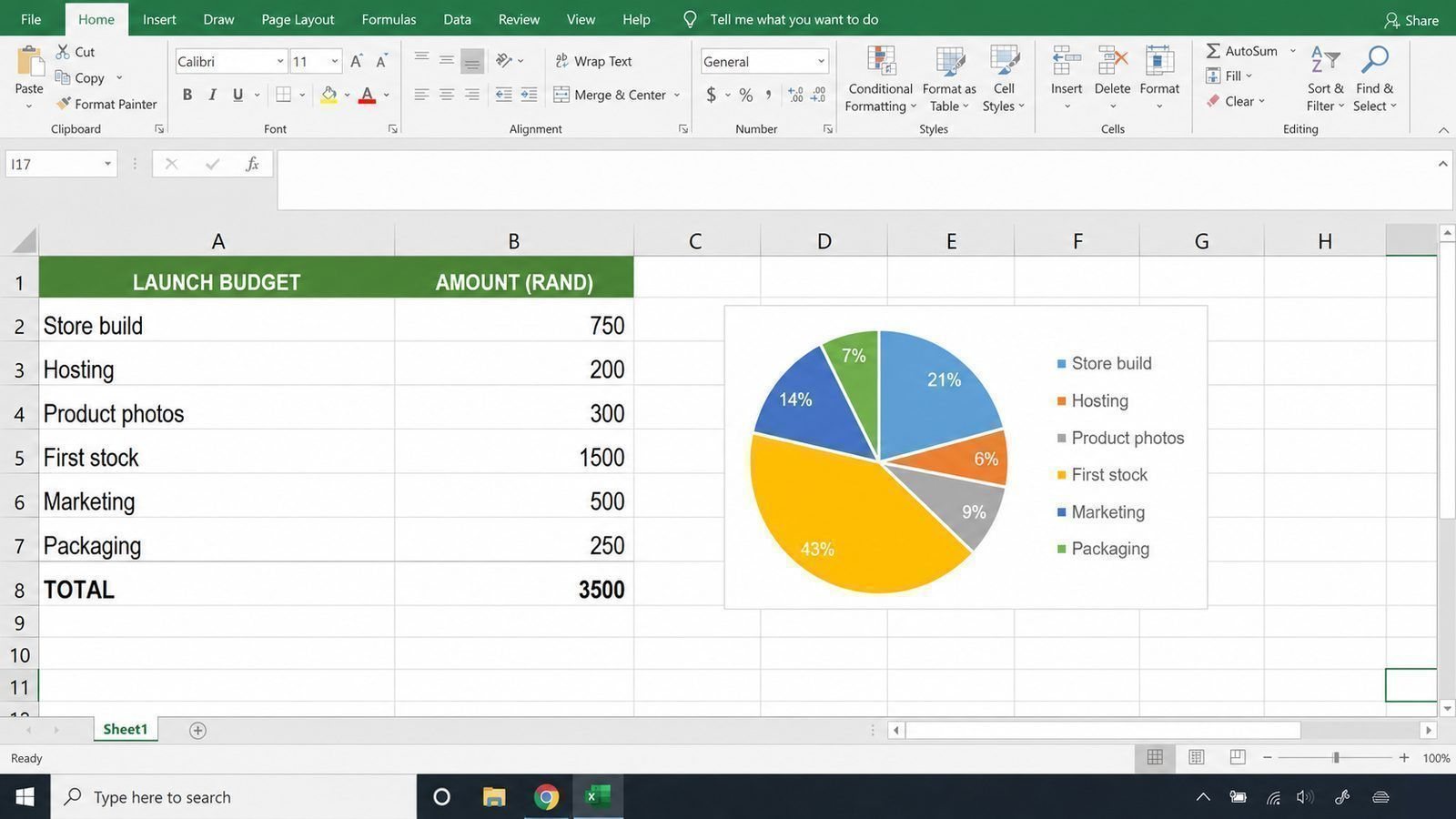
The Full Launch Budget
| Line | Lean | Comfortable |
|---|---|---|
| Store build | R2,000 – R6,000 | R10,000 – R30,000 |
| Domain and first hosting | R500 | R1,500 |
| Product photos | R0 (your phone, daylight) | R2,000 – R8,000 |
| First stock | R1,000 – R5,000 | R10,000+ |
| Launch marketing | R1,500 | R5,000 – R15,000 |
| Packaging | R300 | R1,500 |
The Costs That Repeat 🔐
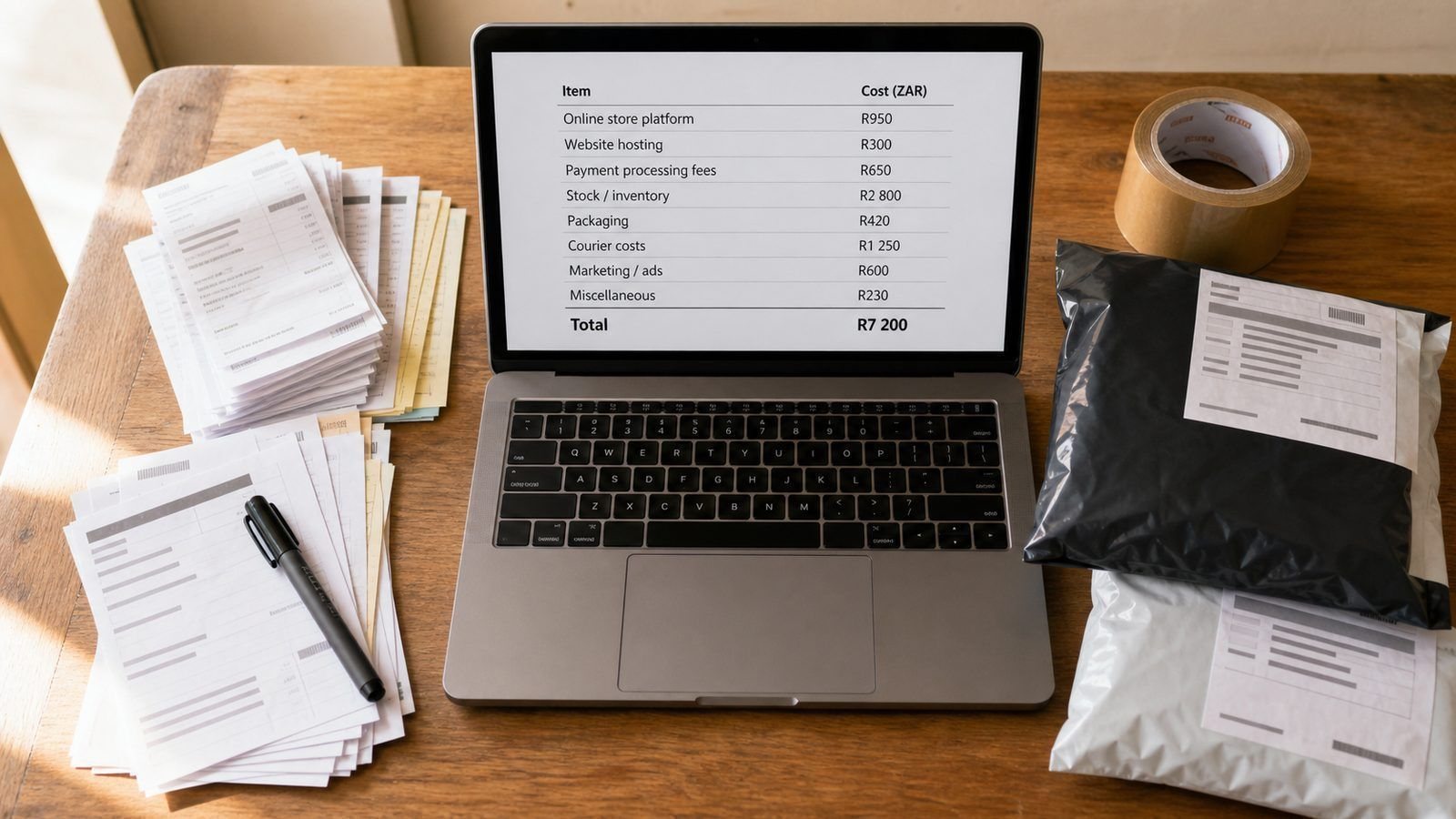
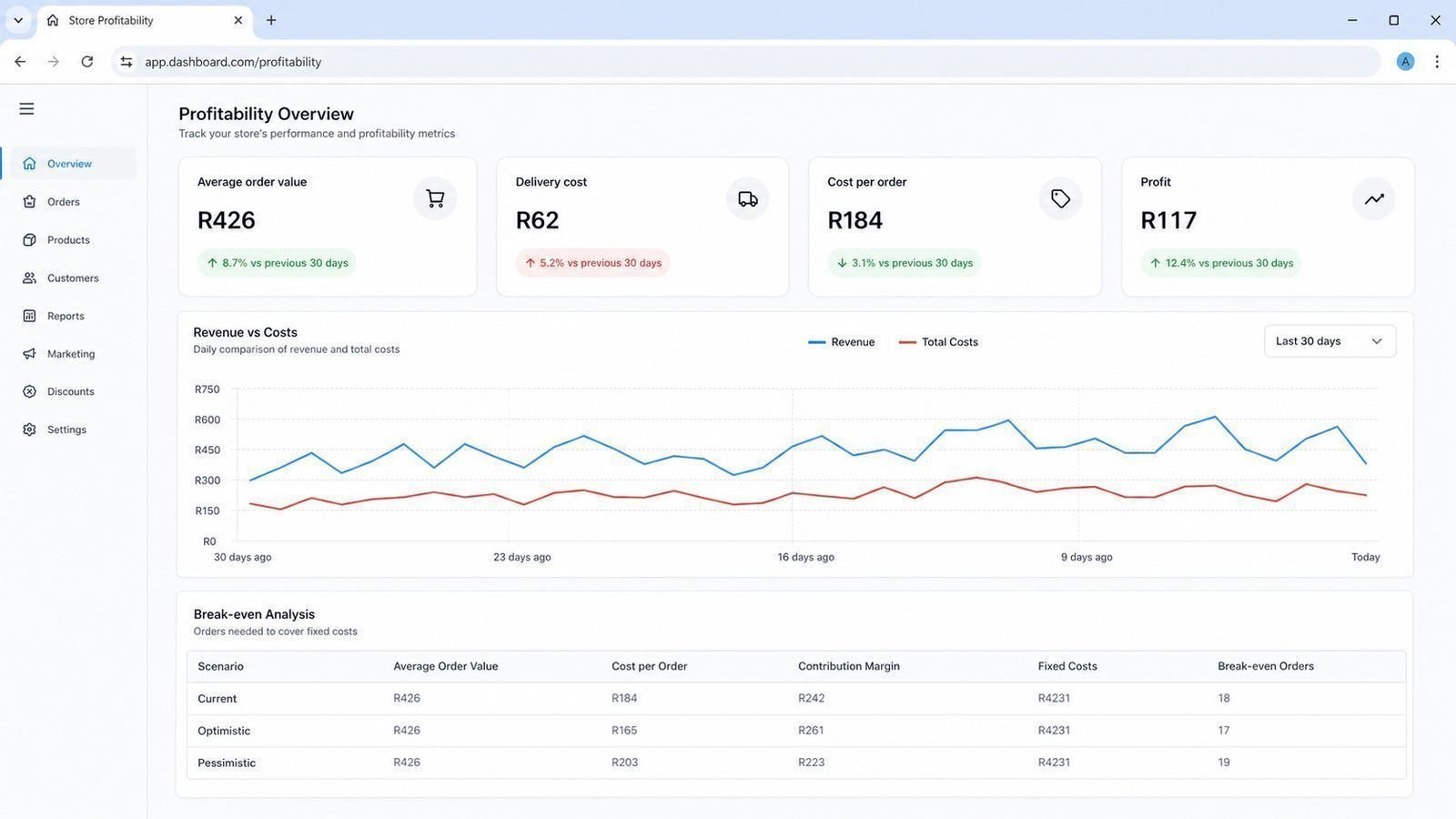
Payment fees of about 2% – 3.5% per order, courier charges per parcel, subscription or hosting monthly, and a marketing budget from the first month. Add those together and divide by your average order value — that is your break-even number of orders per month, and it should be the first figure you calculate, not the last.
Where Beginners Overspend 📣
- A custom build before a single sale has been made
- Stocking every variant instead of the two that sell
- Professional photography for products nobody has asked for
- Paid ads before the store has any reviews or proof
The Break-Even Calculation, Worked
An example with round numbers: average order value R380, gross margin 40% (R152), payment fees about R11, packaging R12, courier charged to the customer but costing you R65 on discounted shipping. That leaves roughly R64 per order before marketing. With R3,000 a month of ads and a cost per order of about R90, the store loses money until repeat buyers arrive — which is why the repeat rate is the number to watch weekly, not the follower count.
Run this calculation with your own numbers before launch, then again after the first fifty orders when the estimates stop being guesses. Most stores that fail in month four failed at this page in week one.
What to Cut First When Cash Is Tight
Cut in this order: paid ads to products with unproven demand, professional photography for slow movers, premium packaging, and paid apps you can replace with manual work. Protect instead: product photography for your top five sellers, delivery clarity, and answer speed.
Cash problems in young stores are rarely solved by a discount. They are solved by selling two things you already have to people who already buy from you — which is why a simple repeat-customer message list is worth more than any new channel in the first six months.
Where Your First R10,000 Should Go
If the whole budget is R10,000, spend it in this order: store setup and payment gateway, product photography for the first ten items, delivery packaging and courier account, a small ad budget for one product, and a buffer for the first two returns. That is a complete, working store rather than a half-finished one with a premium theme.
Notice what is not on the list: paid apps, a custom logo animation, printed labels, and anything that only matters once you have orders. Buy those from revenue. Stores that spend their whole budget before the first sale are usually refinancing by month two, and the second round of money is always harder to find than the first.
Two Numbers to Check Monthly
| Number | Target direction | What it tells you |
|---|---|---|
| Orders per week | Up or steady | Whether the store is alive |
| Average order value | Up | Whether bundles and upsells work |
| Repeat customer share | Up | Whether the store earns loyalty |
| Cost per order | Down | Whether marketing is efficient |
| Returns rate | Steady | Whether promises match reality |
Five numbers, one page, once a month. Owners who track these decide with evidence; owners who track followers decide with mood.
The Repeat-Customer Maths
Two stores can sell the same number of orders and make very different profits. The difference is how many of those orders come from people who already bought before. A store where thirty percent of orders are repeat buyers spends far less to reach the same volume than one where every order is a stranger — and its cash flow is far easier to plan.
That is why the humble message list matters so much. Every order gives you permission to speak to a buyer again: an order update, a thank-you, a small note when something new arrives. Done consistently, the list quietly becomes the cheapest marketing channel you own.
Check the repeat share monthly. If it is falling, fix the after-sale experience before spending more on ads.
Frequently Asked Questions
What is the minimum to start?
About R5,000 – R8,000 including a small stock position, a starter store and a modest first marketing push.
How long until the store pays for itself?
Depends on margin and repeat rate. Make the calculation before you launch, and revisit it every month.
Should delivery be free?
Free delivery above a threshold usually lifts average order value more than it costs in courier fees. Test it with your actual numbers 🛒.
How much should the first month of ads get?
Enough to test one offer properly, usually a few thousand rand, and no more until the store proves checkout and delivery work. Ads sent to a broken process simply buy complaints faster — prove the basics first.
When should I buy stock in bulk?
When one product has sold steadily for two months and your cash flow can cover the stock without stopping your marketing. Bulk buys put slow movers on shelves and cash in boxes.
Do I need an accountant from day one?
You need tidy records from day one and an accountant when volumes or questions justify one — usually within the first year.
Open the shop while the demand is there. See online store packages — from R5,500Get my free store quotation |