Hi there! Today we'll build an invoice that gets paid faster and keeps SARS happy too. 📋 ✅
| Quick answer: a compliant invoice carries your details, the client’s, a number, dates, line items and totals — miss one and payment waits. |
Getting paid is a paperwork sport 🧾. The work is done, the client is happy, and the money is sitting in somebody’s inbox behind a document that is missing one number.
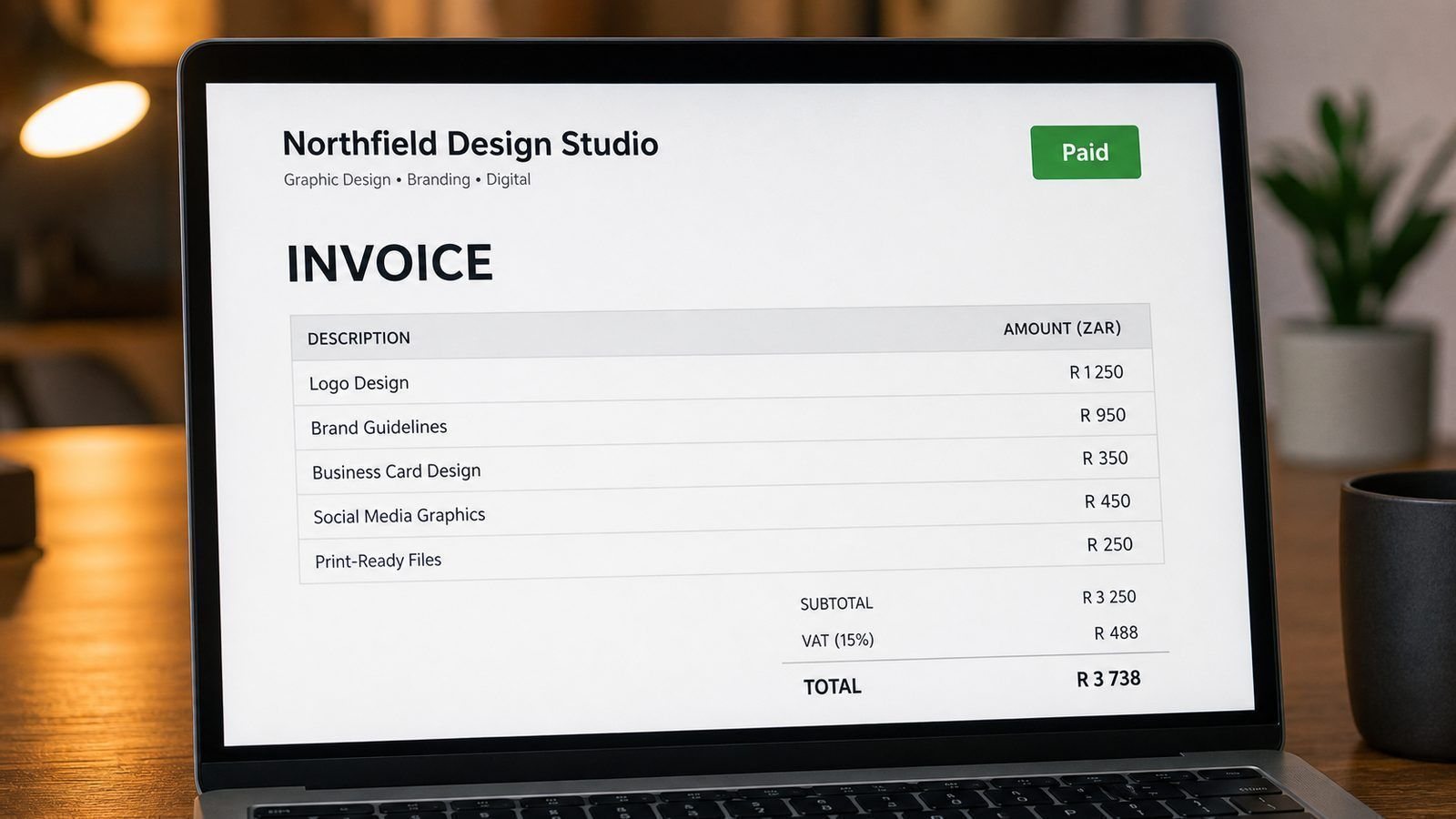
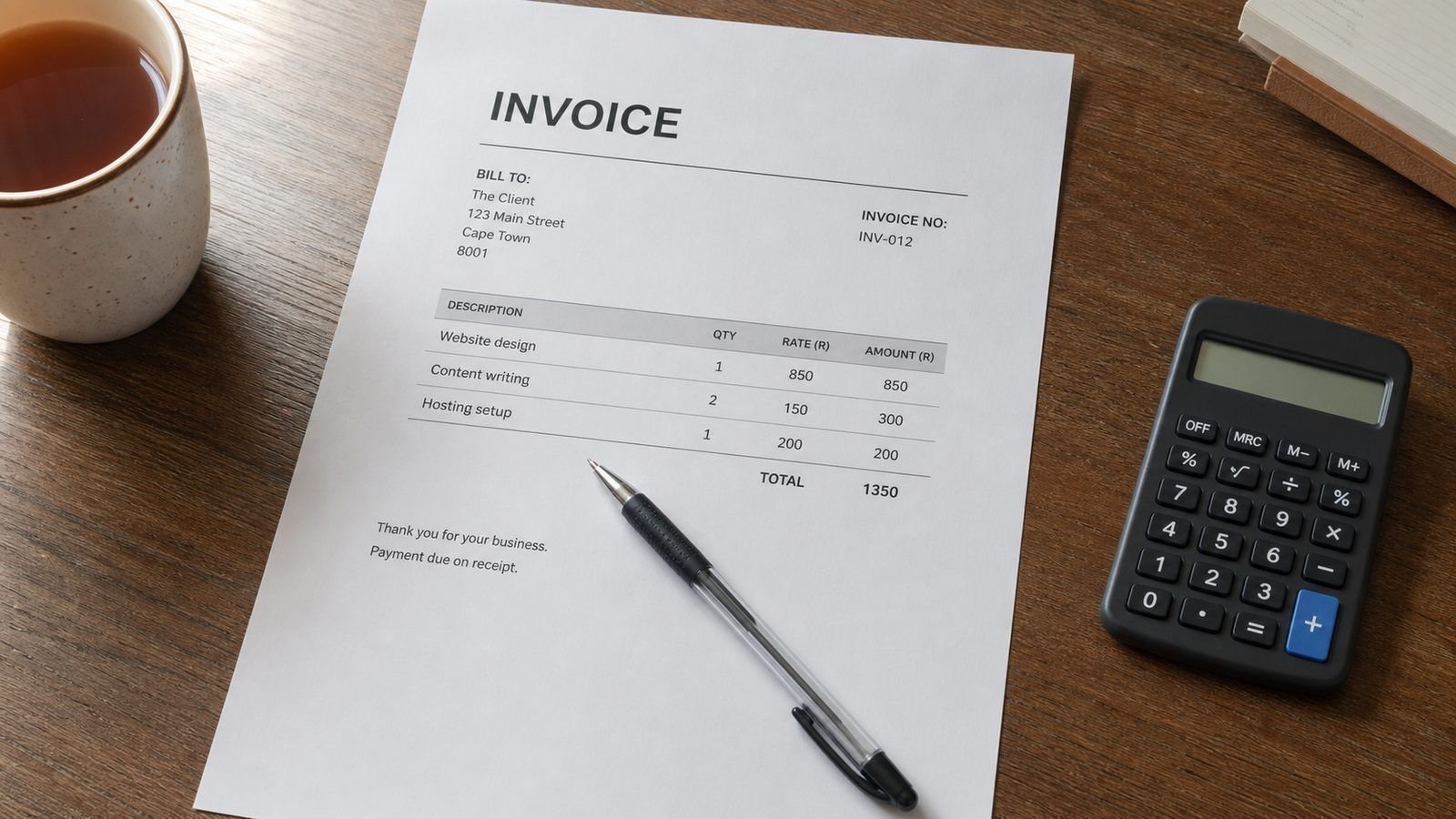
The Fields That Must Be There
| Field | Why it matters |
|---|---|
| Your business name, address, contact | Identifies the seller clearly |
| Invoice number and date | Your audit trail and their reference |
| Client name and billing details | Routes it to the right desk |
| Itemised work or goods | Answers the question before it is asked |
| Subtotal, VAT (if registered) and total | Finance teams reject anything vague |
| Payment terms and bank details | The whole point of the document |
Numbering and Records 🔢
Number invoices in one unbroken sequence, never reused. Keep every invoice and the proof of payment together, and keep them for at least five years. This is dull until a client disputes a payment or a tax question arrives — then it is the difference between an afternoon and an audit.
The Follow-Up Routine ⏰
- Send the invoice the day the work is done, with a thank-you and the terms repeated
- Confirm receipt two days later — politely, in writing
- Remind on the due date, again three days after
- Phone on day seven past due, and agree a date in writing
Businesses that run this routine get paid, on average, weeks earlier than businesses that send a second invoice and hope. The difference is not aggression; it is predictability.
Terms That Protect Your Cash Flow
Standard terms in small service businesses: invoice on completion, payment within seven to fourteen days, deposits for work above a set amount, and interest stated on late payment (even if you rarely charge it). Written clearly at the bottom of every invoice, terms stop being a debate and become part of the deal.
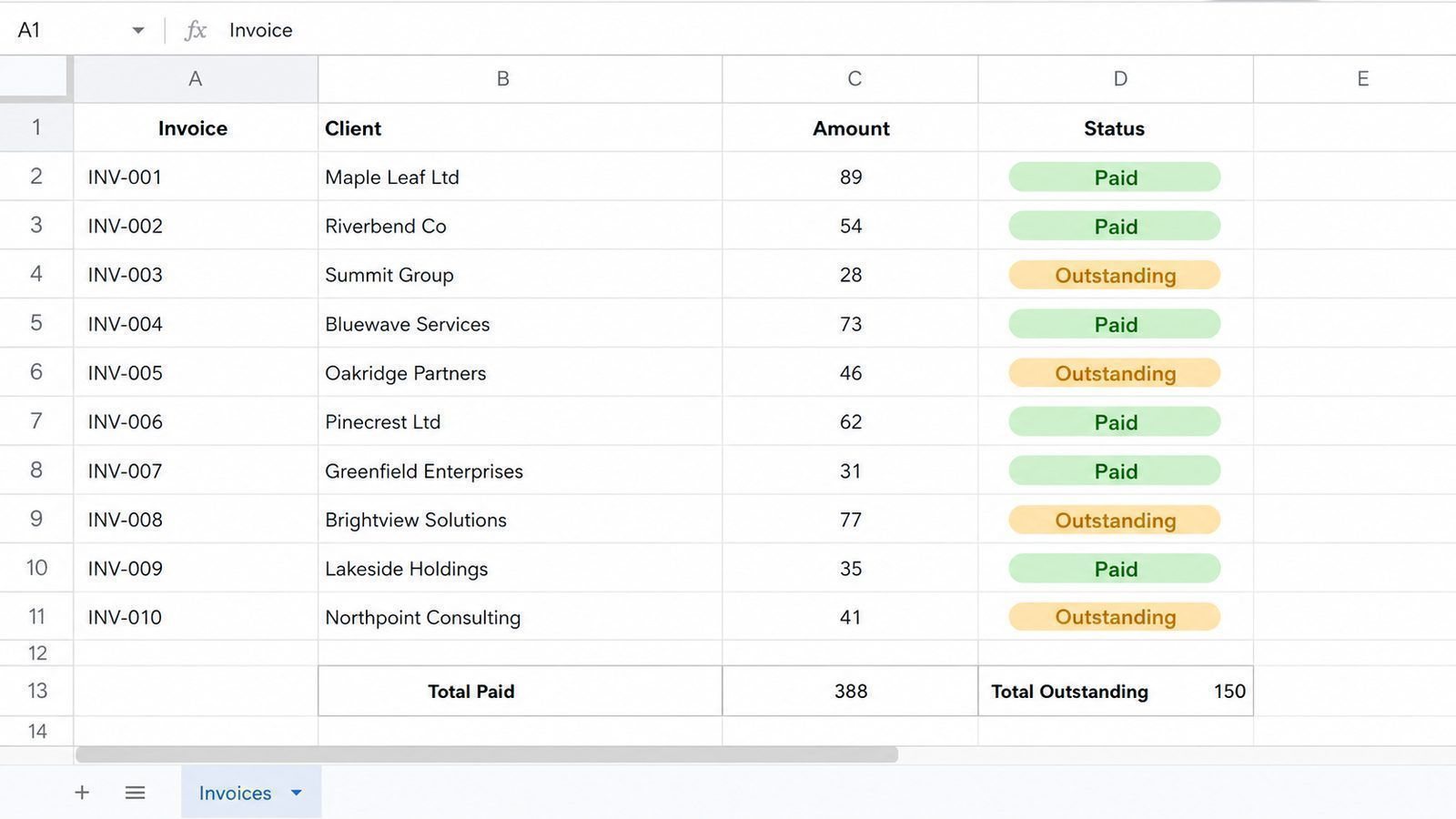
If your clients are large organisations, expect longer cycles and plan for them: price work so that a 60-day payment does not break your month, and keep a simple cash flow sheet showing what is invoiced, due and overdue. Knowing the difference between busy and paid is the most underrated skill in small business.
The Paperless Routine
Number sequentially in a spreadsheet, save every invoice as a PDF in year and month folders, and log payments the day they land. Fifteen minutes a week keeps the whole record clean enough for a bank, a funder or a tax practitioner to work from without an archaeology project.
That same routine makes borrowing and funding dramatically easier later. Lenders do not want your enthusiasm; they want six months of tidy statements that match your invoicing. The business that invoices and records neatly is, in practice, the business that can raise money when an opportunity arrives.
What Every Invoice Should Show
There is no mystery to a correct invoice. Your business name, registration number if you have one, and address. Your client’s details. A unique sequential number and the date. A description of what was delivered — as specific as the order was. The amounts, the total, and VAT shown separately if you are registered. Your banking details, and payment terms with a due date.
Everything else is optional. What is not optional is consistency: the same layout, the same numbering sequence, the same terms every time. Clients pay faster when the document looks familiar, and your records look professional the moment a bank or funder asks to see them.
Six Details That Cause Rejections
| Detail | The fix |
|---|---|
| Missing invoice number | Number every invoice in one sequence |
| Vague description | Describe what was delivered, not “services” |
| No due date | State payment terms on every invoice |
| Wrong client details | Check the name and VAT number carefully |
| VAT mixed in | Show it as a separate line where registered |
| No reference | Ask clients for a purchase order number |
Each one costs a week somewhere down the line. Six small habits, all of them optional until the invoice goes unpaid.
Getting Paid Without Being Awkward
Most late payment is not refusal; it is a queue. Make the reminder part of the process rather than a personality test. Send the invoice the day the work is done. Confirm by message that it arrived. Then remind on day three after the due date, day seven, and day fourteen — each time politely, each time with the invoice attached again.
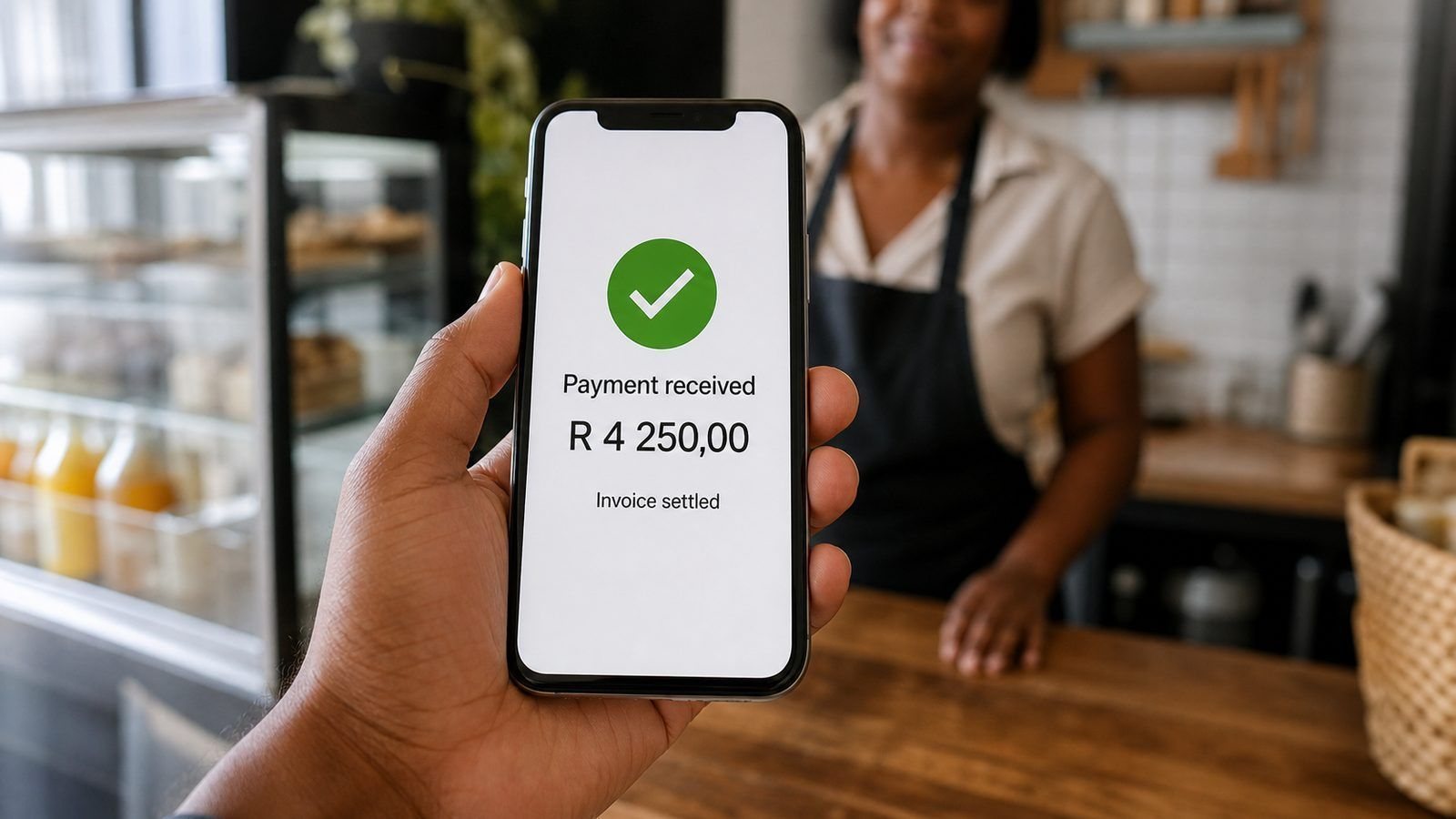
Make paying easy: a link in the email, clear banking details on the PDF, and a reference clients can quote. And for larger jobs, ask for a deposit before starting. A deposit is not distrust; it is project management, and clients who baulk at 30% upfront rarely become your best payers.
These four habits move payment dates far more than any firm language in the terms.
Frequently Asked Questions
Do I need to be VAT registered to invoice?
No. Only add VAT if you are registered, and only once your turnover crosses the threshold is registration compulsory.
Can my invoice be a Word document?
Yes, as long as it is consistent, numbered and complete. What matters is the information, not the file type.
What if a client keeps stalling?
Keep the trail in writing, stick to your stated terms, and decide in advance how much work you will accept from a late payer. Terms mean nothing if you never enforce them.
Should I charge VAT on invoices?
Only if you are registered and required to. If you are registered, show the VAT line separately, keep the records, and speak to a tax practitioner about your returns.
What is the fastest way to get paid?
Invoice on the day, confirm receipt, and make paying easy — a payment link or clear bank details on the invoice itself. Friction, not clients, is usually the delay.
Take the follow-ups out of memory and into a system. See what a custom system includesAsk for a free system consultation |